
Math 6 · MGSE6
Print set
Sample spread from Lesson 14. Same header, same QR — the lesson book teaches, the workbook collects.
Lesson book: the teaching page. Students read it, keep it all year, and write nothing on it.
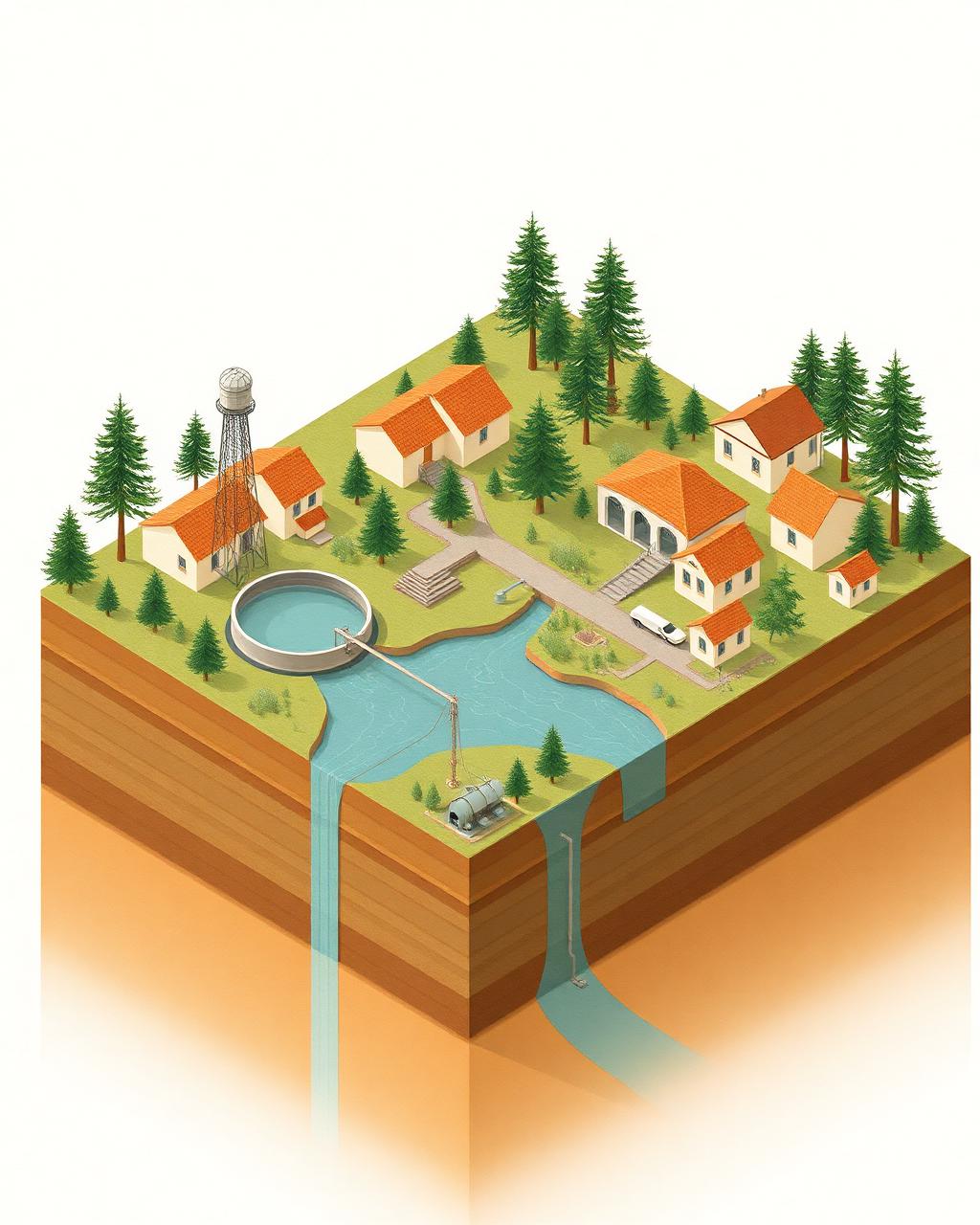
A community water system, from source to tap
At a glance
- Objective
- Write and interpret unit rates from a real water-system ratio.
- Standard
- MGSE6.RP.2 — understand unit rate a/b, b ≠ 0.
- Time
- 45 minutes · 10 teach · 25 work · 10 share
- You need
- Pencil, workbook page, calculator optional
Words to know
- Ratio
- A comparison of two quantities, written a : b.
- Rate
- A ratio comparing two different units, like gallons per minute.
- Unit rate
- A rate with 1 in the second position — 85 gallons per 1 person.
- Per
- The word that signals division. "Per person" means ÷ people.
Who uses this in Columbus, Georgia
Operators at Columbus Water Works, the city water utility, size pumps and pipes with unit rates every shift. A civil engineer uses the same arithmetic to decide how large a storage tank a new neighborhood needs.
Lesson 14
Ratios in the Water System
Unit 1 · Ratios & Rates · MGSE6.RP.2
The big picture:Columbus Water Works, the city water utility, moves about 38 million gallons a day. Engineers don't think in totals — they think in ratios: gallons per person, pipe diameter to flow, cost per thousand gallons. Today you'll build the same unit-rate thinking they use, then apply it to the water line running through your resilient community model.
Model it
Write 106,250 gallons ÷ 1,250 people as a ratio, then reduce to a per-one rate. Say aloud: "85 gallons for every 1 person." A unit rate always has 1 in the second position.
Worked example
18 gallons in 4 minutes → 18/4 = 4.5 gallons per minute. Check: 4.5 × 4 = 18. Rates compare cleanly only when both are written per one unit.
Watch for
Students often flip the ratio (people per gallon). Anchor the language: the unit you want to end in goes on top.
Practice · nothing is written here
The four practice problems and every writing line live in the workbook. This page is read, not filled in.
- 1Gallons per Person
- 2Which Pipe Wins?
- 3Sizing the Tank
- 4Cost per Thousand
Before you turn the page
- · I can say my rate out loud with the words "for every one."
- · I checked my unit rate by multiplying it back.
- · I labeled both units — gallons and people — in every answer.